"The quest to understand whales is a human enterprise."
The Messenger from Earth
In 1977, Voyager 1 and 2 launched carrying gold-plated records to the stars. They contained greetings in 55 languages and the songs of Humpback Whales.
The Paradox: We send their voices to the cosmos, yet we lack the context to decipher their meaning here on Earth.
Whales live 99% of their lives in the deep ocean—a world alien to us—yet they are mammals that share our biology: air-breathing, warm-blooded, and giving birth to live young.
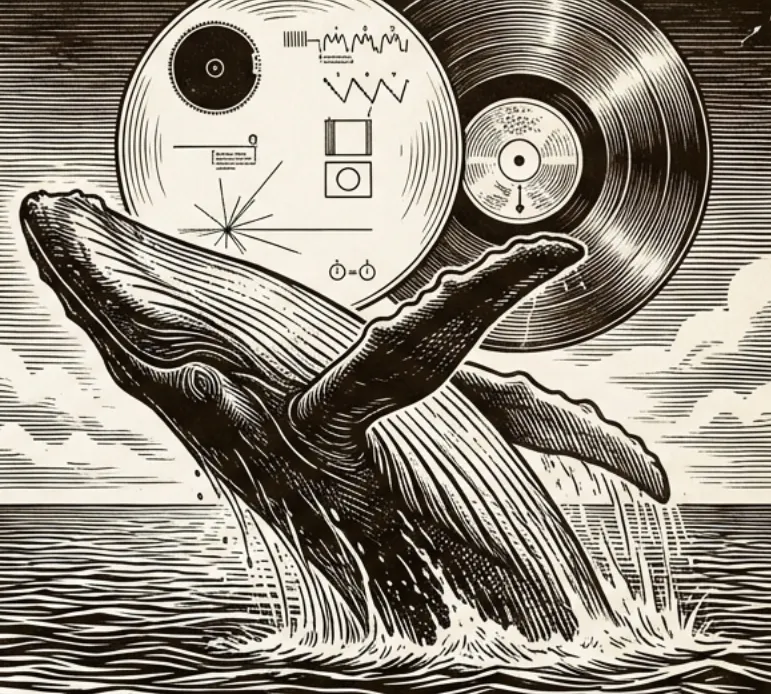
The Voyager Golden Record carrying whale songs into interstellar space.
Two Ways to Spy
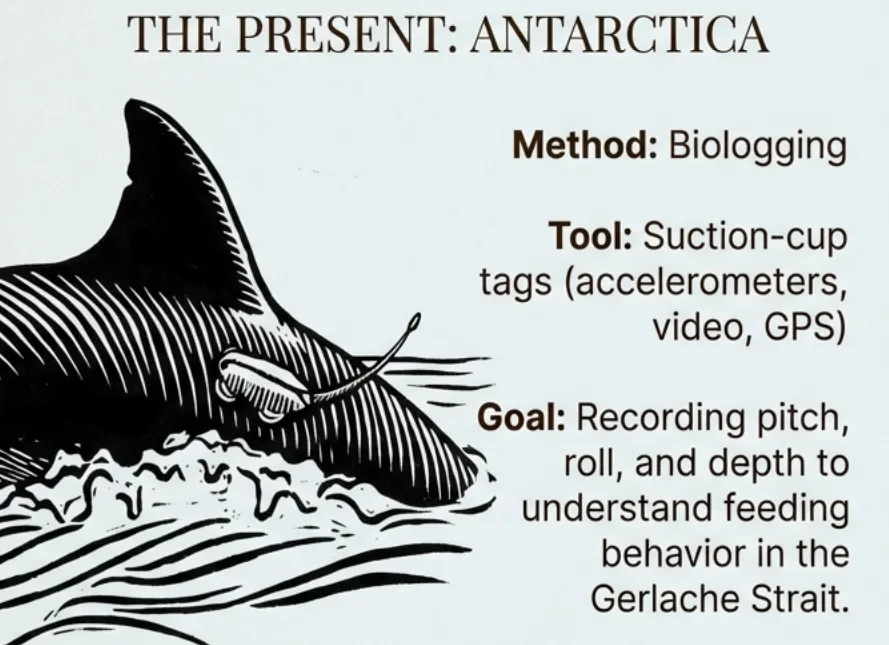
THE PRESENT: ANTARCTICA
Method: Biologging
Tool: Suction-cup tags (accelerometers, video, GPS)
Goal: Recording pitch, roll, and depth to understand feeding behavior in the Gerlache
Strait.
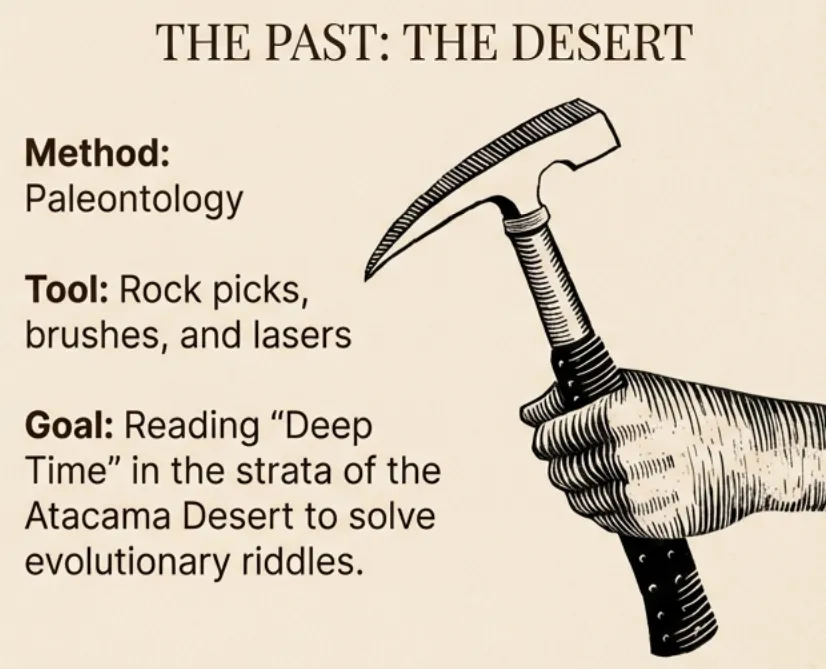
THE PAST: THE DESERT
Method: Paleontology
Tool: Rock picks, brushes, and lasers
Goal: Reading “Deep Time” in the strata of the Atacama Desert to solve evolutionary
riddles.
We need both perspectives. Fossils explain the anatomy; living whales explain the behavior.
The Dog That Swam
The Eocene Epoch (~50 Million Years Ago)
The Ancestor: Pakicetus
Lived on the riverbanks of the Tethys Sea (modern-day Pakistan).
Why is this a whale?
The Involucrum is a dense, fan-shaped bone in the middle ear found ONLY in cetaceans. It is the skeletal proof that this dog-like creature is the earliest ancestor of the Blue Whale.
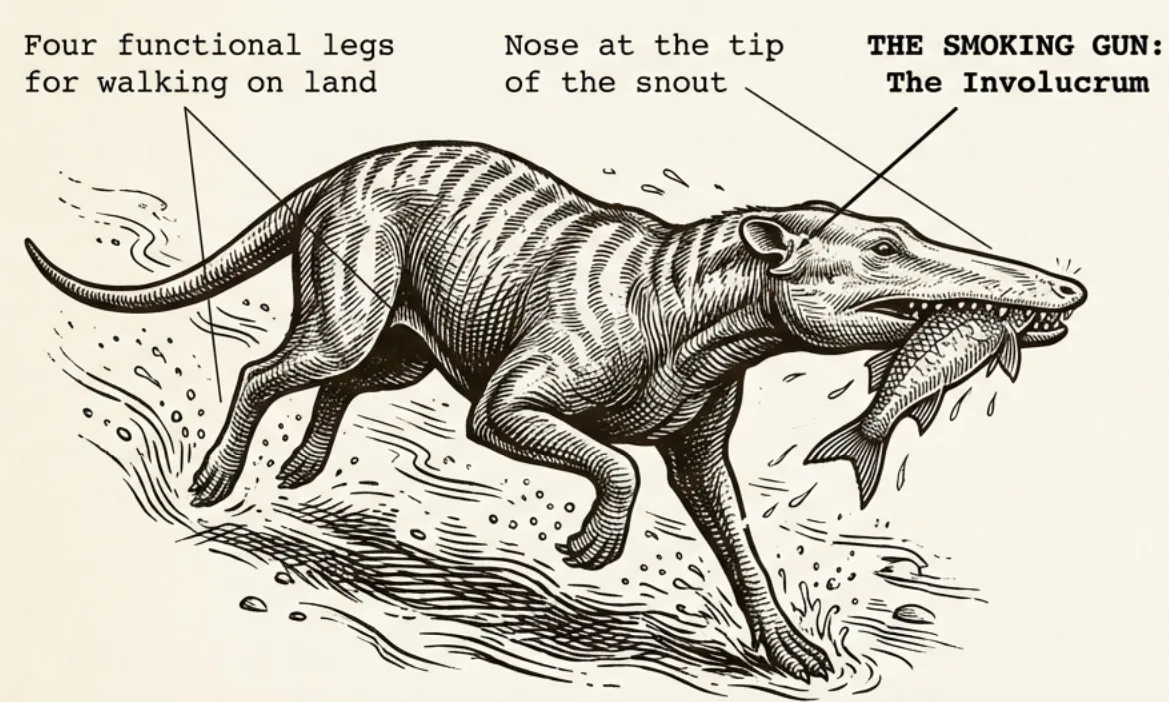
Features:
- Four functional legs for walking on land.
- Nose at the tip of the snout.
- THE SMOKING GUN: The Involucrum.
The Missing Link
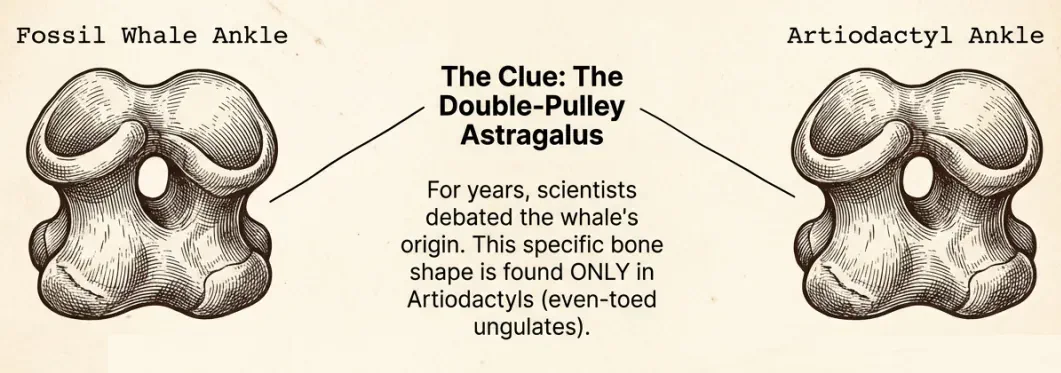
The Clue: The Double-Pulley Astragalus
For years, scientists debated the whale's origin. This specific bone shape is found ONLY in Artiodactyls
(even-toed ungulates).
The Verdict:
Whales are highly modified Artiodactyls. Their closest living cousins are Hippos. They
share the same family tree as cows, camels, and deer.
The King Lizard
Basilosaurus (~40 Million Years Ago)
The Innovation: Severing ties with the land.
Despite its name ('King Lizard'), Basilosaurus was a fully aquatic mammal. It marks the shift
from paddle-swimmers to tail-driven swimmers. It never returned to land.
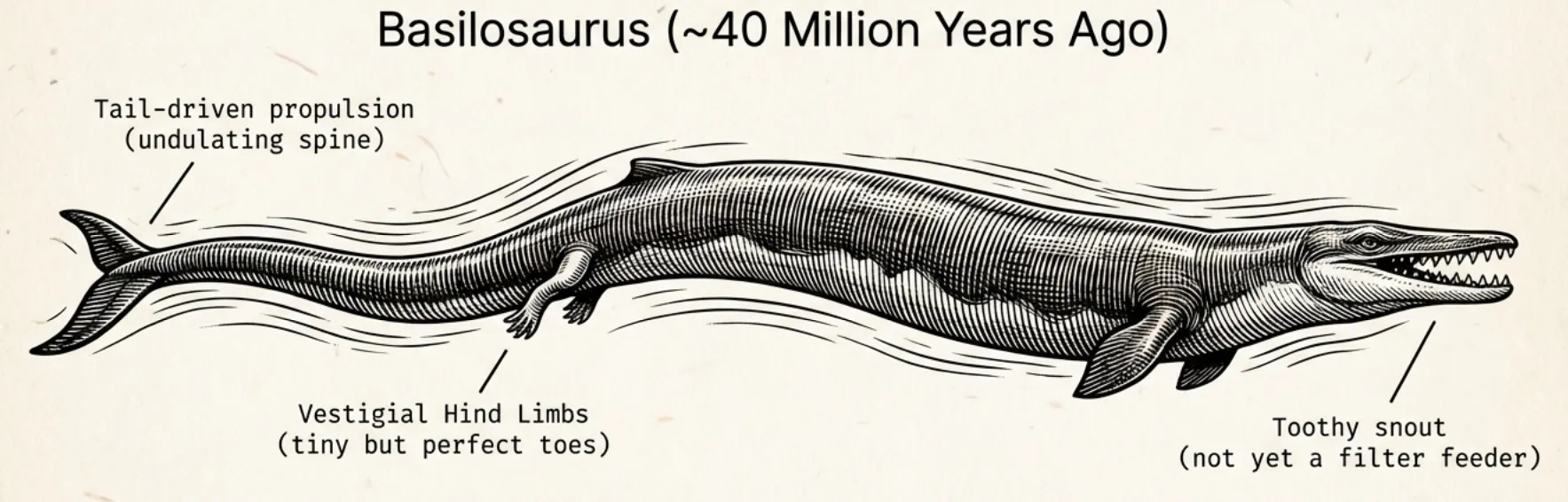
Anatomy:
- Tail-driven propulsion (undulating spine).
- Vestigial Hind Limbs (tiny but perfect toes).
- Toothy snout (not yet a filter feeder).
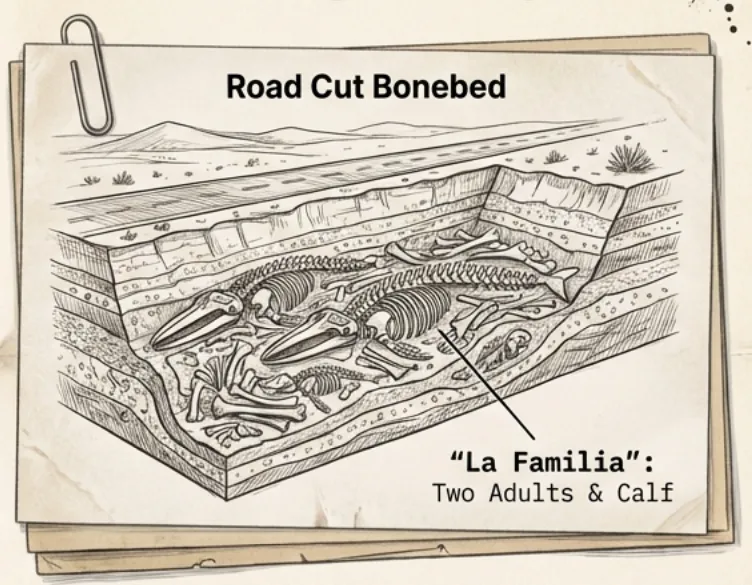
The Graveyard at the Highway
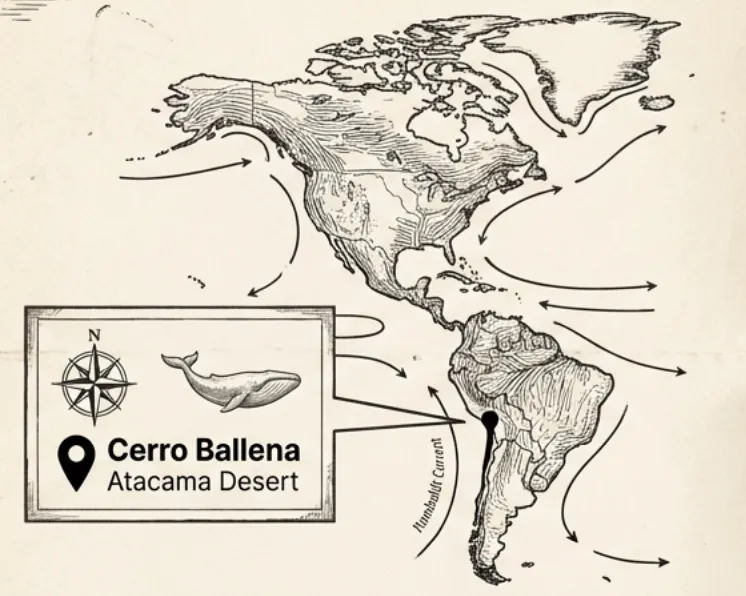
Location: Atacama Desert, Chile (Pan-American Highway)
The Discovery: Expansion of the highway revealed a massive bonebed in the desert
strata.
The Scale: Dozens of complete skeletons found in dense layers.
“La Familia”: Two adult whales and a calf preserved together, suggesting a sudden,
simultaneous event.
The Urgency: Scientists had weeks, not years, to excavate before the highway paved over
history.
“The Laser Cowboys”
Digitizing the Past against a Deadline
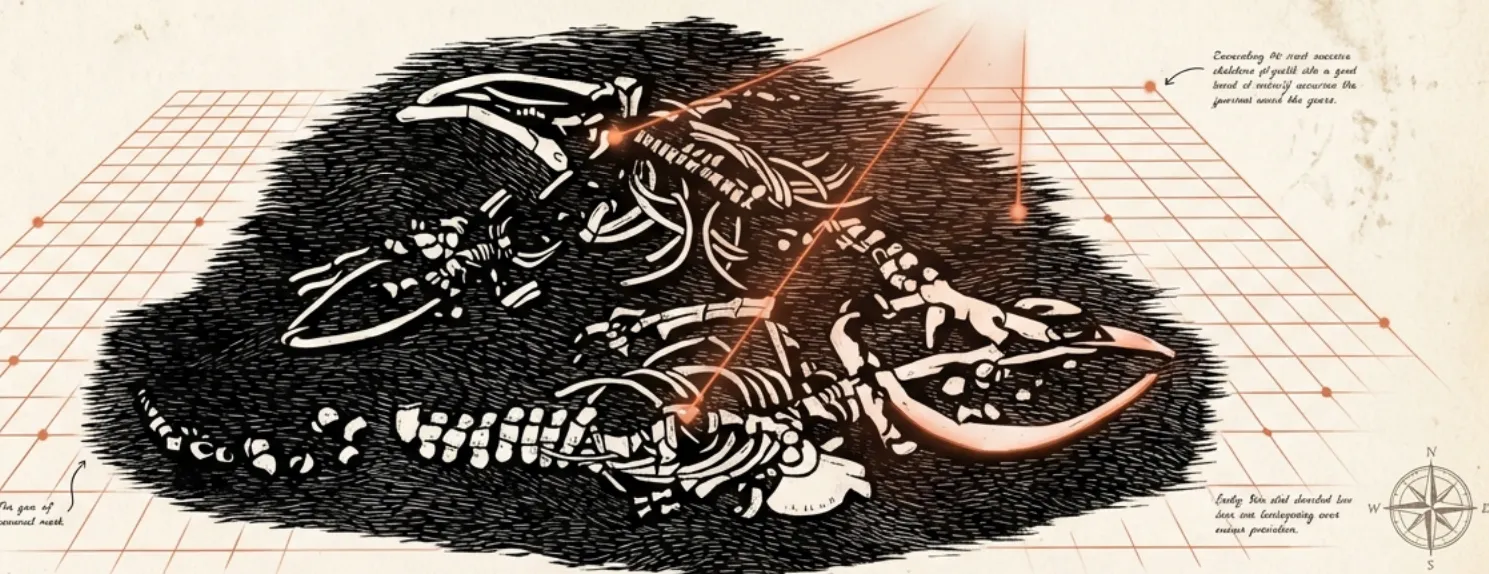
The Problem: Excavating 40+ massive skeletons physically would take years. The highway
deadline was immediate.
The Solution: Lidar (Light Detection and Range) and high-res photography.
The Result: Digital Time Travel. The site exists now as a millimeter-accurate 3D
digital world. Scientists can study the orientation of every bone from a laptop in Washington D.C., even
after the physical site was covered.
Murder on the Miocene Coast
The Forensics: What Killed Them?
THE CLUES:
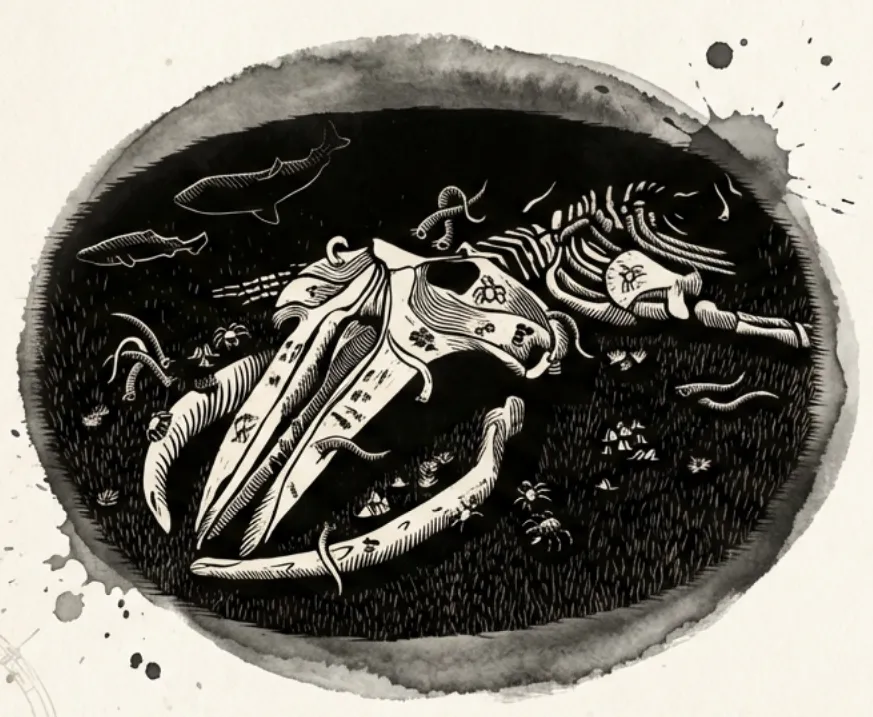
- Multiple Events: Four distinct layers of bones separated by thousands of years.
- The Victims: Mixed species—Whales, Aquatic Sloths, Seals, Billfish.
- The Condition: Skeletons complete, belly-up, no trauma, no scavenging.
THE SUSPECT: Harmful Algal Blooms (HABs)
Iron-rich runoff from the Andes fueled toxic algae blooms. Rapid neurotoxins killed marine life
indiscriminately. Dead animals washed into a tidal flat and were buried quickly, protected from
scavengers.
DATE: OCT 2011. INVESTIGATOR: N. PYENSON.
NOTES: Consistent with HAB. Rapid burial key to preservation.
The Miocene Menagerie
Strange Neighbors of the Humboldt Current
Odobenocetops: The 'Walrus Whale' with asymmetrical tusks used to search for food on the
seafloor.
Pelagornis: A seabird with a 17-foot wingspan and a beak lined with bony 'teeth'.
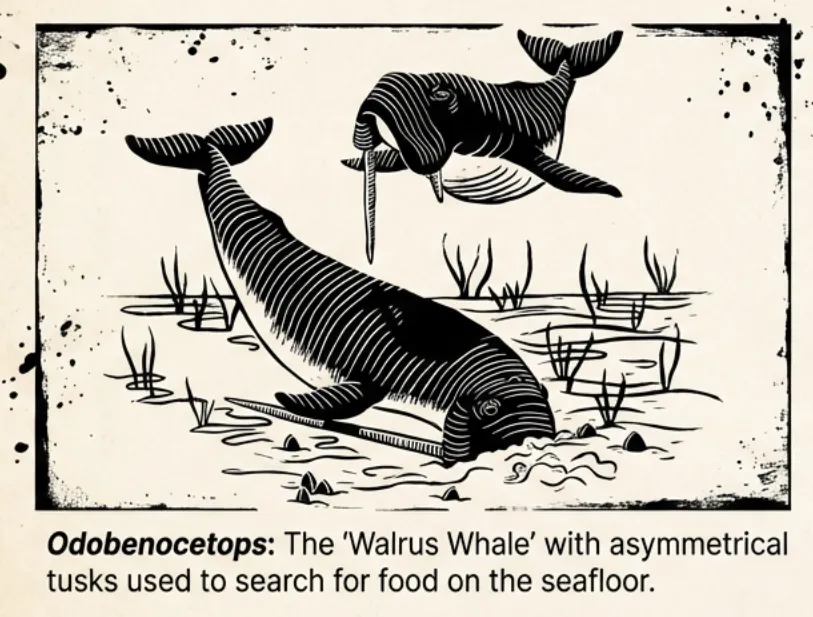
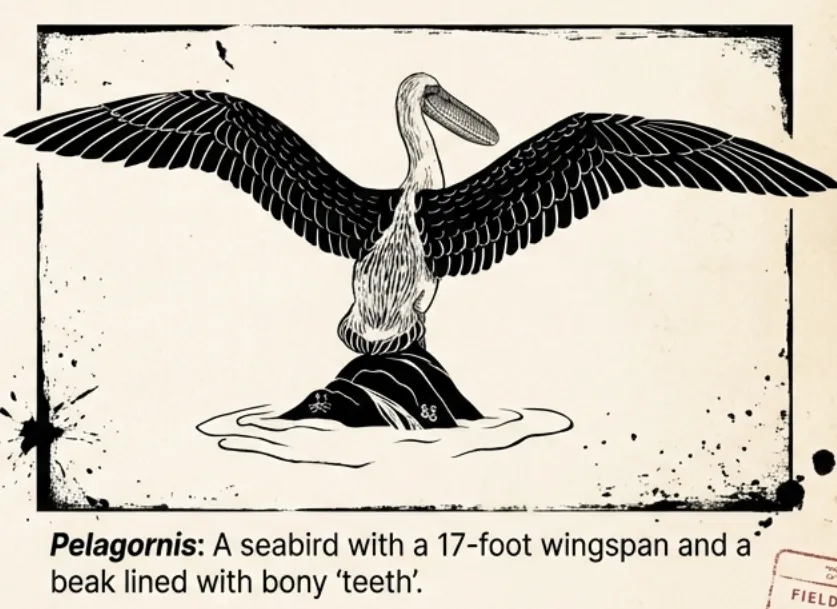
Context: These creatures lived 7-9 million years ago alongside the whales of Cerro Ballena. Evolution experiments with wild forms that often don't survive to the present.
The Scale of Life
The Recent Invention of Giants
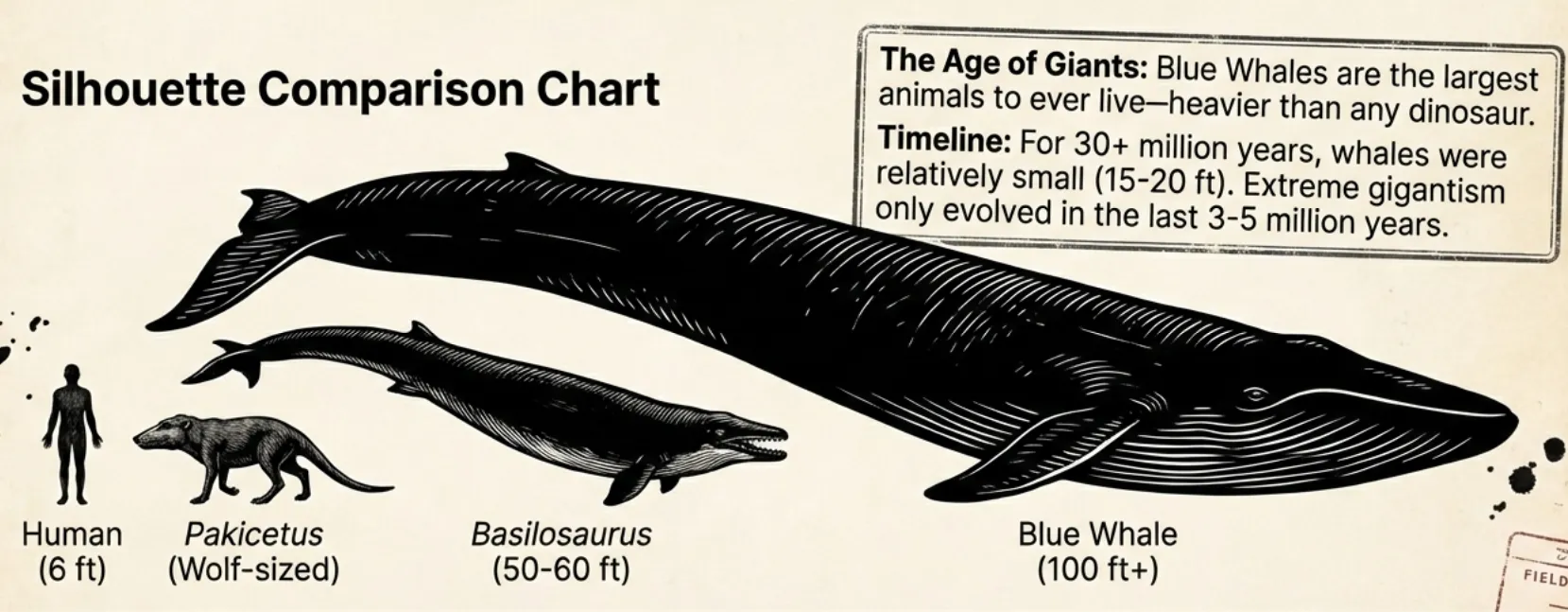
Silhouette Comparison Chart:
- Human (6 ft)
- Pakicetus (Wolf-sized)
- Basilosaurus (50-60 ft)
- Blue Whale (100 ft+)
The Age of Giants: Blue Whales are the largest animals to ever live—heavier than any dinosaur. For 30+ million years, whales were relatively small (15-20 ft). Extreme gigantism only evolved in the last 3-5 million years.
The Filter
The Biological Innovation: Baleen
Material: Keratin (same as fingernails and hair).
Function: Bulk Feeding. Replaced teeth to allow the intake of millions of calories in a
single gulp.
Insight: Baleen appeared before gigantism. It was a necessary tool for size,
but not the only driver.
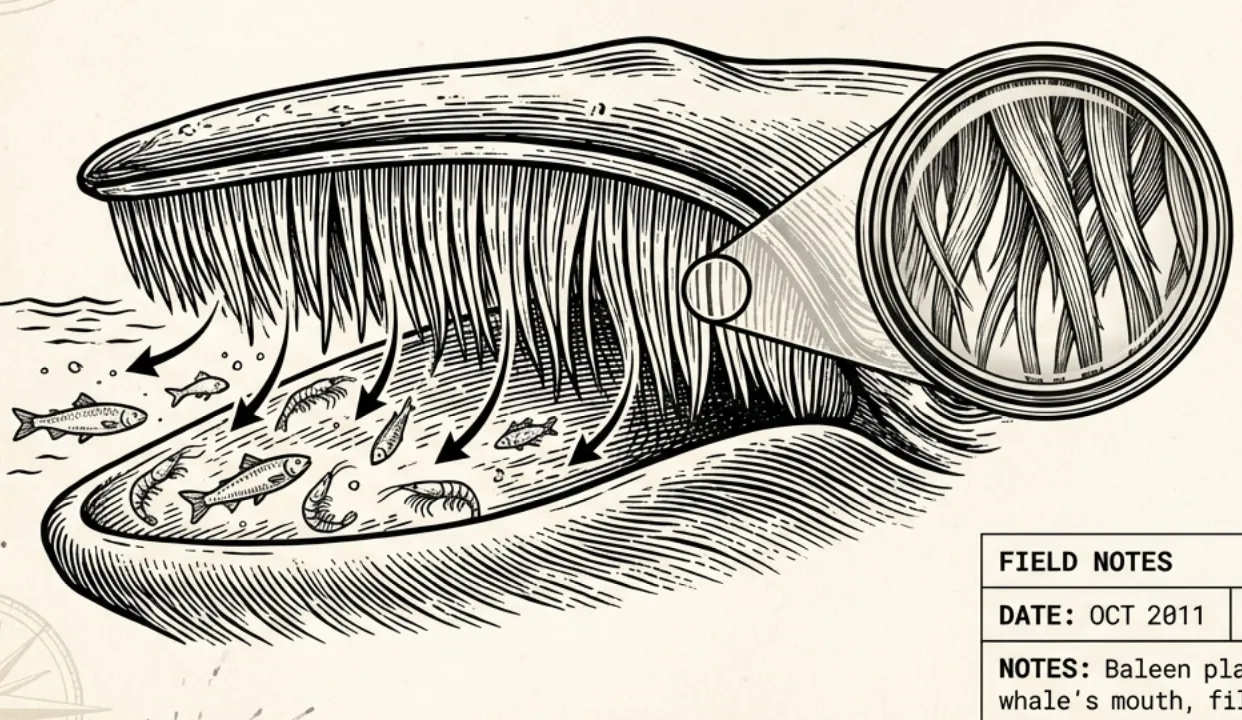
FIELD NOTES - DATE: OCT 2011. INVESTIGATOR: N. PYENSON.
NOTES: Baleen plates hang from the roof of a whale's mouth, filtering water for prey.
The Engine of Gigantism
Why So Big, Why Now?
- Ice Ages: Change ocean currents.
- Upwelling: Brings nutrient-rich cold water to the surface.
- Krill Explosion: Patchy but massive food sources.
- Gigantism: Whales become “energy storage tanks” to travel vast distances between these food patches.
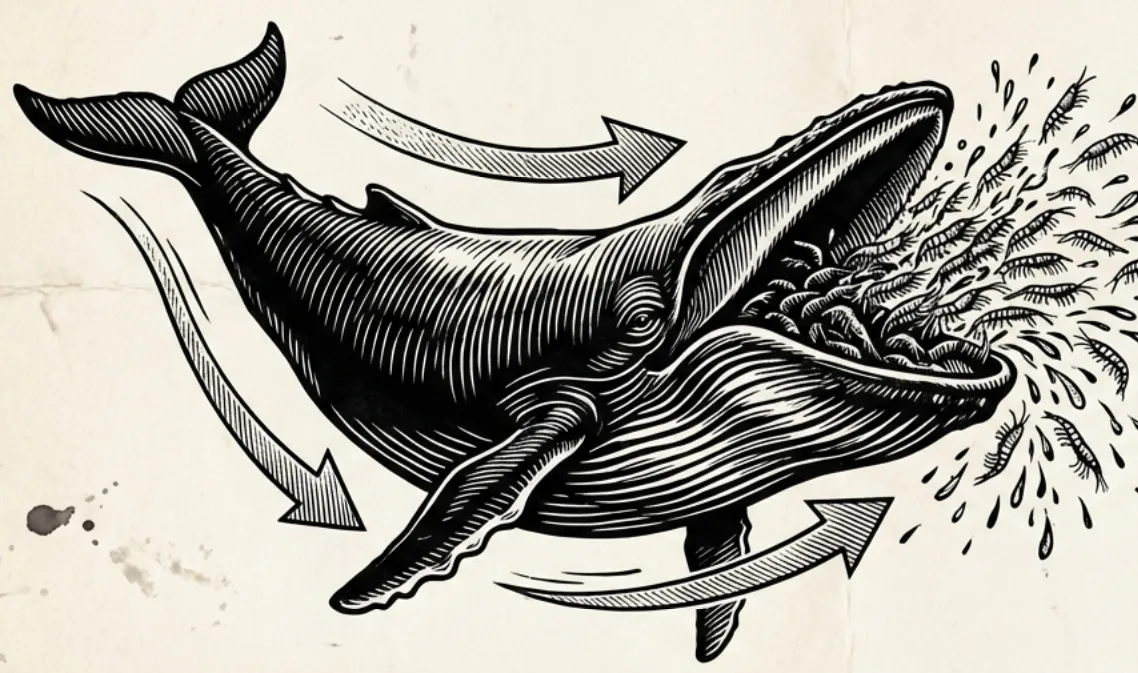
DATE: OCT 2011. INVESTIGATOR: N. PYENSON.
NOTES: The interplay of climate, currents, and krill blooms fueled the evolution of extreme
size.
The Shifting Baseline
The Anthropocene Impact
The Slaughter: 20th Century whaling killed over 3 million whales. We nearly emptied the
oceans of these giants.
The Consequence: We may have removed the “largest” genes from the pool. Blue whales
today are likely smaller than those of 100 years ago.
The Future: Humpbacks are recovering. Right Whales and Blue Whales remain on the brink.
New threats include ship strikes, noise, and climate change affecting krill.
The View from Deep Time
From the dog-like ancestor on the riverbank to the mass graveyard in the desert, and finally to the icy giants of the Antarctic. Whales are time travelers. They carry the history of our planet in their bones—from the Eocene land-bridge to the Anthropocene ocean.
“For the animal shall not be measured by man... they are other nations, caught with ourselves in the net of life and time.” — Henry Beston